


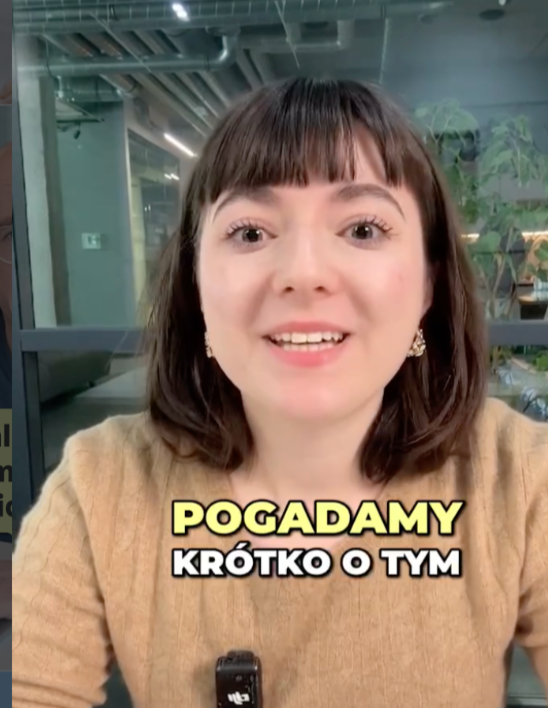
Almost two years of cooperation Klaudia Makles with Edrone, which resulted in over 30 online events that I conducted, over 1,200 engaged users and numerous content on social media - including long-form content on YouTube.
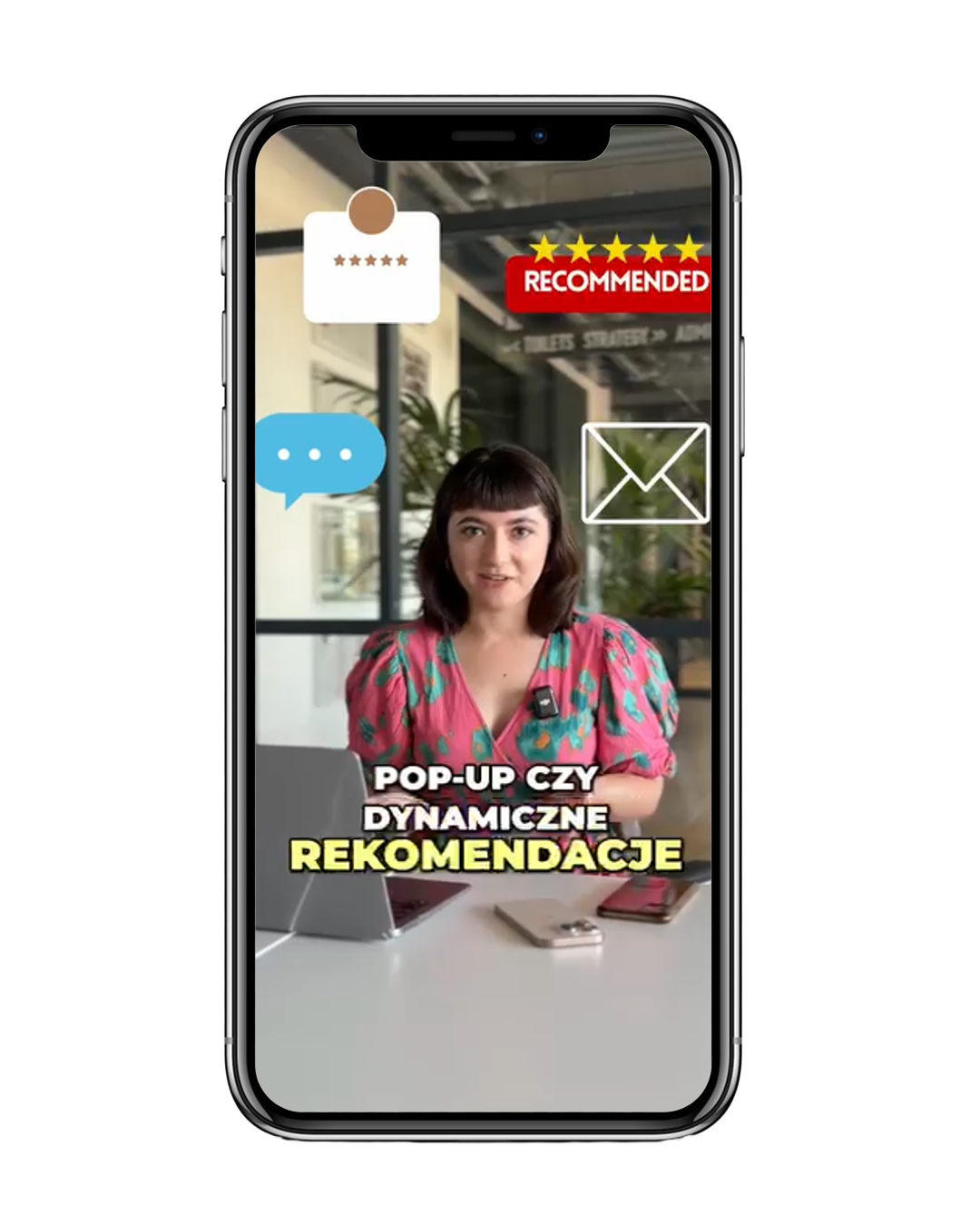
EDUCATIONAL AND SALES CONTENT
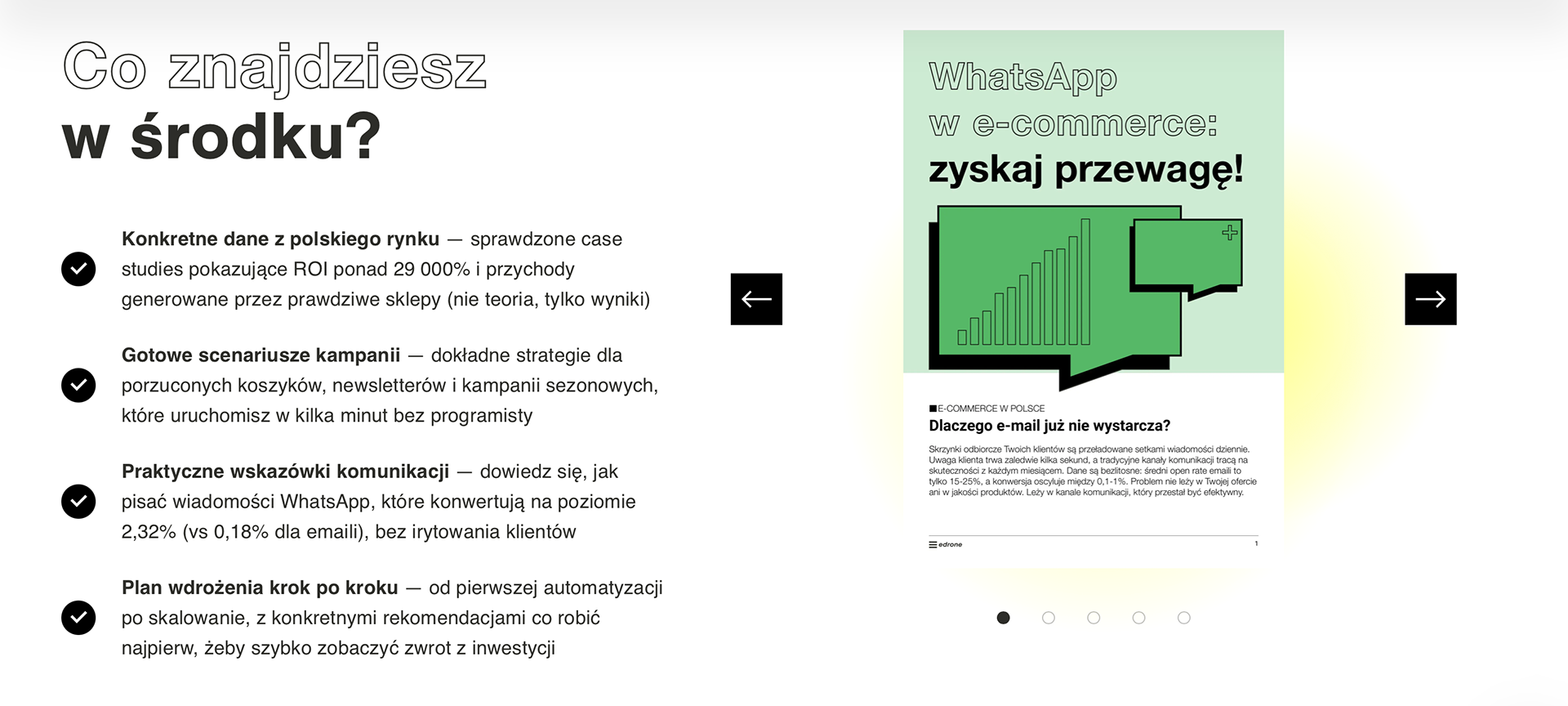
I created educational content such as pagers, e-books, and newsletters. I was responsible for the content and copywriting. My goal has always been to provide key information to the user in a way that retains their attention and demonstrates the product's value. I speak the language of benefits and also love interactive forms and illustrations. In a world of information noise, the ability to condense and diversify text is becoming a most valuable skill.
CASE STUDY:
How did I increase AI Sales Chat adoption with a well-thought-out communication structure?
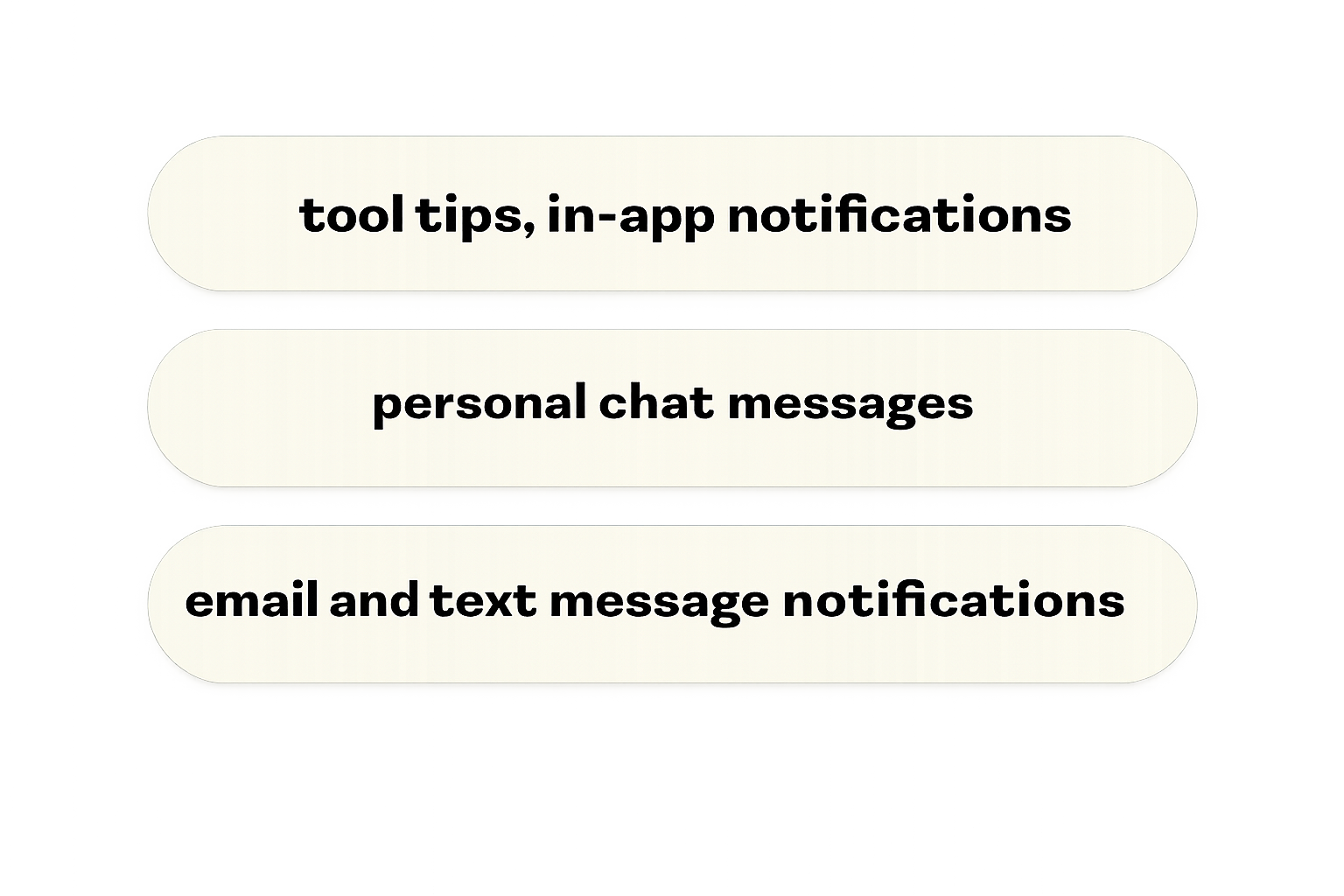
AI Sales Chat is an artificial intelligence-based feature that responds to customers in real time and supports sales. It understands the store's inventory, recommends products, and conducts conversations. I designed a communication system tailored to the time and segment. I know that the best time to make a decision is when a user is logged in. Valuable tips, changes, and updates to the system create a need to visit it more often.
I identified 3 key groups:
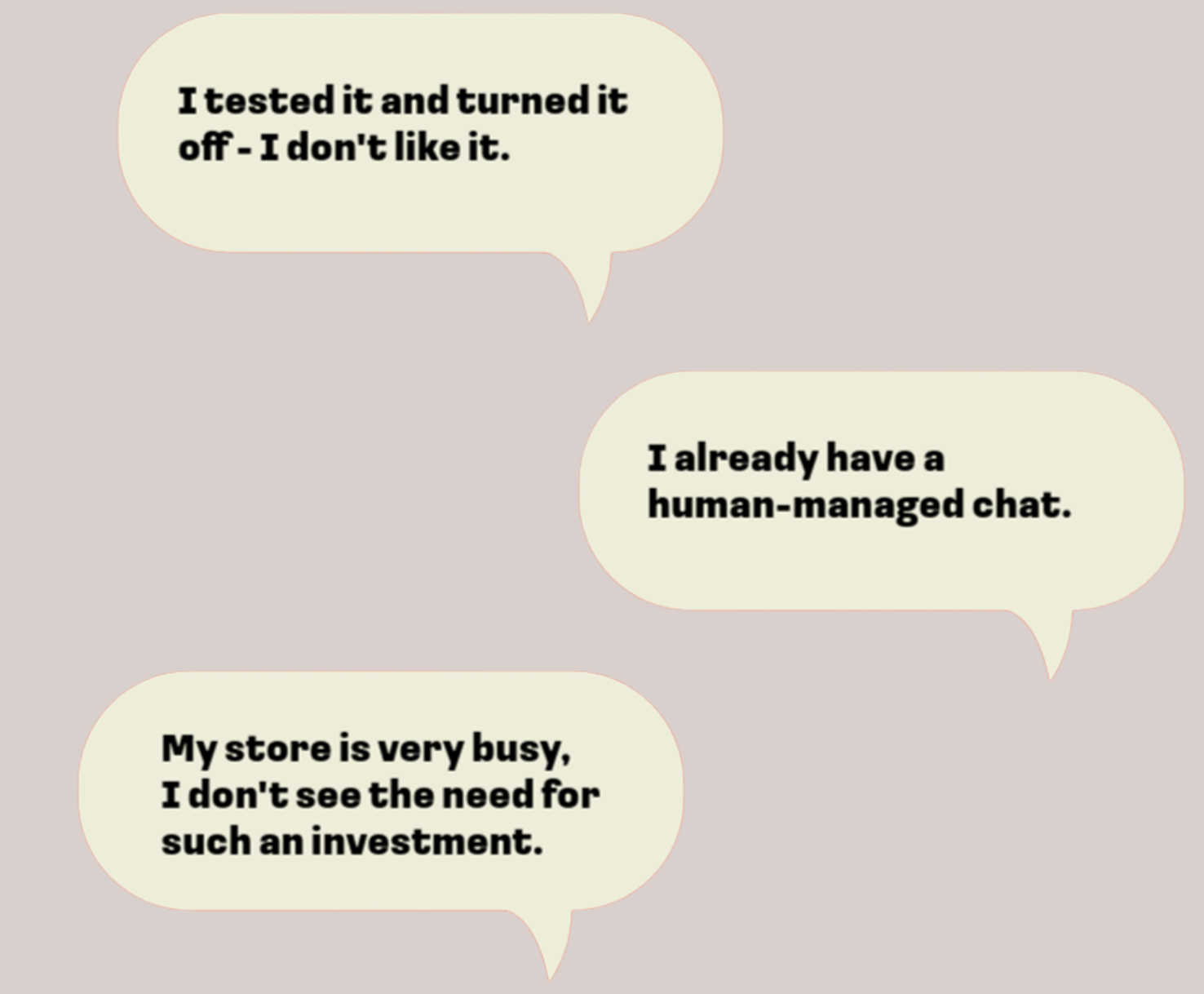
I responded to the objections
Customers with manual chat > support costs and time.
"You can reduce team work and automate responses."
High-traffic stores > untapped potential
"Up to 70% of users can engage in conversation, which has the potential to increase engagement with the same traffic!"
Customers who deactivated AI Chat > disappointment
Improvements, new features - if someone has rejected a product once, I have to give them a reason to change their mind.
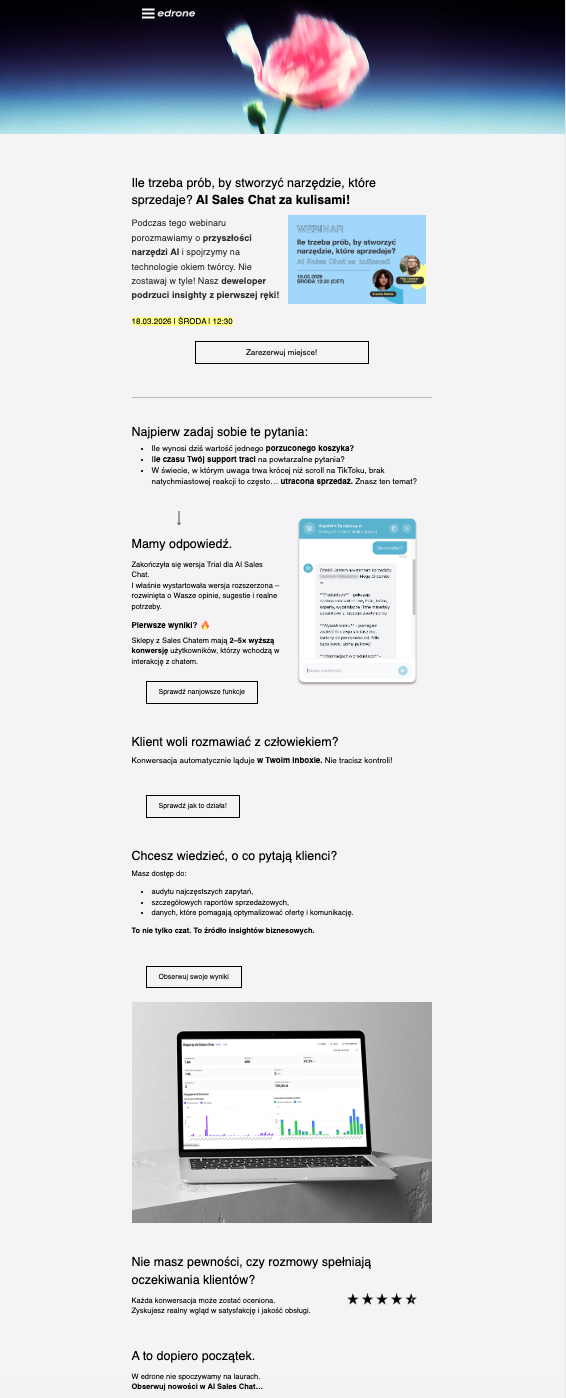
Webinar as a sales tool
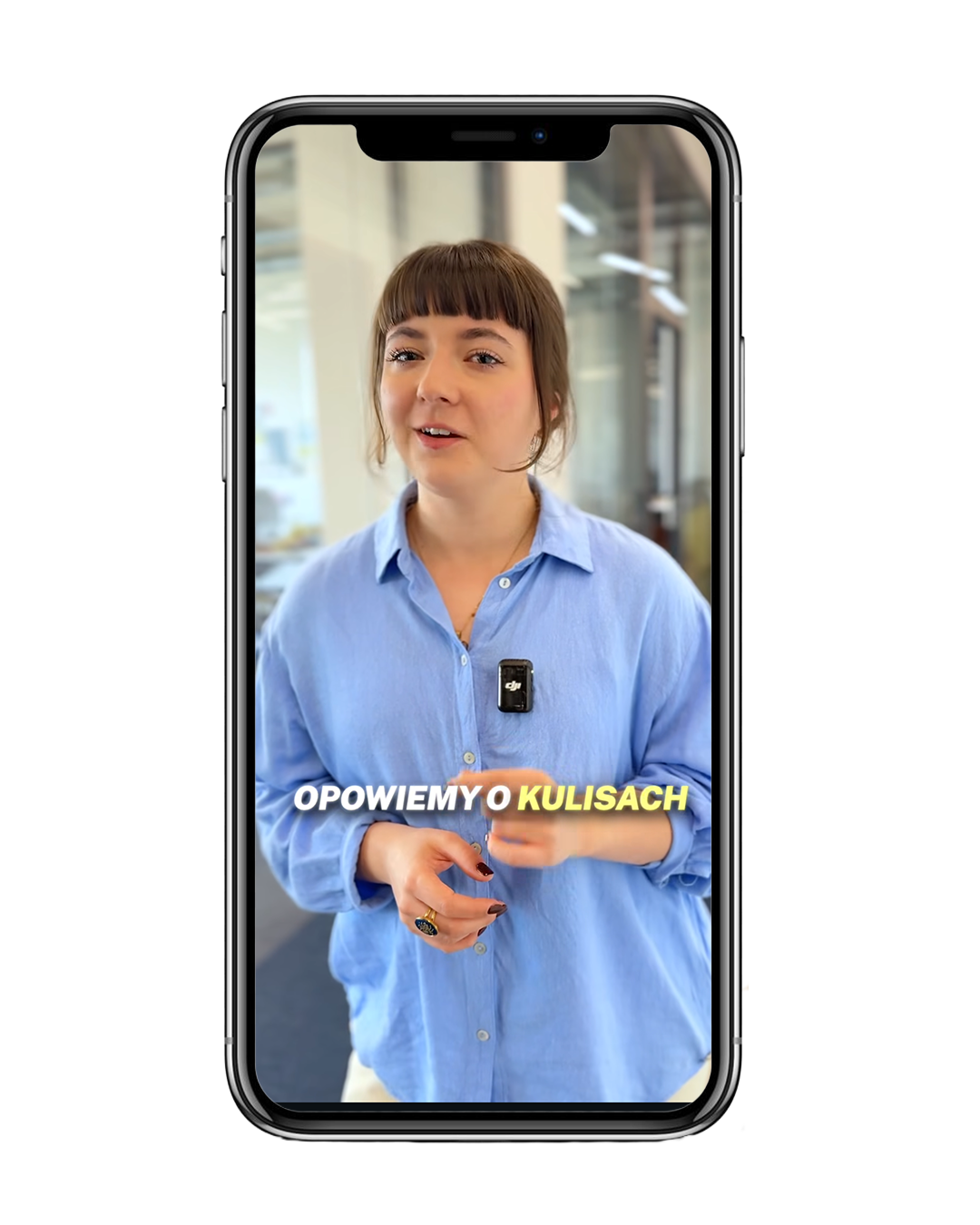

I organized a "behind-the-scenes" AI Sales Chat webinar with the product creator. We showed "what's under the hood." We wanted to shorten the distance between people and technology. My regular presentations and clients' familiarity with my face and voice are a crucial element of the company's relationship with users. With years of experience, I've noticed, among other things, increasing engagement in the Chat section during events.
Trial as a moment of decision
We introduced a 7-day free trial and sent an SMS notification within the last 24 hours. Without a deadline, users postpone their decision indefinitely. SMS has a 98% open rate, so messages are only appropriate for urgent matters. SMS is not an information channel, but a decision-making channel.
and additional flavors
- self-aware communication